
- ✓Spring 2026 NYFW shows are running now, with brands and buyers both watching the same week
- ✓The commercial window between a runway show and when shoppers stop caring is measured in days, not the weeks a traditional post-production pipeline assumes
- ✓Runway photography and e-commerce product photography have different technical requirements — a straight runway shot rarely works as a product listing image without rework
- ✓Compression and format choices at export time determine whether a same-week product page actually loads fast enough to convert
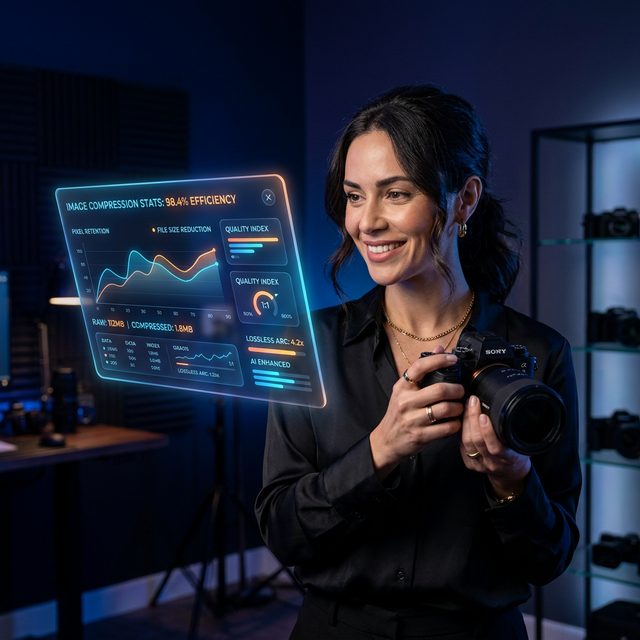
New York Fashion Week's Spring 2026 shows are running this week, and for every brand on that runway, the gap between "the show happened" and "shoppers stopped caring" is measured in days, not the weeks a traditional fashion post-production pipeline was built around. Social feeds move at the speed of the show itself — a look photographed on the runway on a Tuesday is competing for attention against a dozen other collections by Thursday. Brands that turn runway photography into sellable product images fast are the ones capturing that window. Most don't move fast enough to.
Why Runway Photos Rarely Work as Product Shots
A runway photograph is composed for a fashion editorial: dramatic lighting, motion blur intentional, the model mid-stride, background elements part of the story. A product photo needs the opposite — even lighting, minimal motion blur, the garment as the unambiguous subject, and usually a neutral or on-brand background rather than a runway set.
That mismatch is why most brands don't publish runway images directly to a product page. They need either a fast studio reshoot of key pieces immediately after the show, or a careful crop-and-color-correct pass on the strongest runway frames that can stand in until a full shoot happens. Either path requires speed the traditional fashion production calendar wasn't built for.
The Fast-Follow Workflow That Actually Closes the Gap
Day of show: Pull the strongest still frames from the runway photography, crop tight on the garment, and correct color against a reference swatch. These become teaser images, not final product shots — but they go live immediately, riding the exact moment attention is highest.
24 to 48 hours: A focused studio reshoot on the pieces getting the most engagement, not the full collection. This is where a brand's actual product photography happens, compressed to product-page-ready output the same day it's shot.
By the end of the week: Full product pages live, formatted consistently, loading fast. The brands still working through a six-to-eight-week traditional post-production calendar are publishing into a feed that's already moved on to the next show.
Where Speed Actually Gets Lost
It's rarely the shooting that's slow — it's everything after. Manually resizing and re-exporting dozens of images one at a time, uploading oversized files that then load slowly on a product page, or waiting on a design team to batch-process a folder before publishing. A same-week product page that takes eight seconds to load because nobody compressed the hero images undoes the entire point of moving fast in the first place.
- Batch-compress the studio pass the moment it's shot, not after every other post-production step is finished.
- Export straight to WebP or AVIF for the live product page — smaller files, faster loads, no visible quality loss at normal viewing sizes.
- Keep full-resolution masters separate from the web-optimized set so a later catalog or lookbook use doesn't require reshooting.
Buyers and Press Need a Different Image Set Than Shoppers Do
Fashion week produces at least two distinct audiences with different image needs, and treating them identically slows both down. Buyers and wholesale press need high-resolution, minimally-retouched images that show true fabric and construction detail — they're making purchasing and coverage decisions based on what's actually there, not a polished consumer-facing version. Shoppers, by contrast, respond to the same fast-follow product photography described above: clean, on-brand, optimized for a feed and a product page. A brand publishing one single image set to serve both audiences usually ends up compromising on both — either buyer-facing detail gets lost in over-processed consumer imagery, or consumer engagement suffers from images that read as too technical and unpolished for a shopping context.
Separating these two pipelines from the start — one export track for wholesale and press, tuned for accuracy and detail; another for consumer channels, tuned for speed and feed performance — takes marginally more coordination during an already frantic show week, but avoids the worse outcome of serving neither audience well.
The Real Advantage Isn't the Photography — It's the Pipeline
Every brand on the runway this week has access to good photographers. What separates the ones converting fashion week buzz into sales from the ones still processing images two weeks later is the pipeline between the camera and the product page. Optimage's batch compression turns a folder of fresh studio shots into web-ready files in one pass — the kind of step that either costs you the week or doesn't.
Smaller Labels Feel This Pressure More, Not Less
It's tempting to assume this is mainly a problem for major houses with the resources to run a fast-follow shoot within 48 hours. In practice, smaller and emerging labels showing at fashion week feel the speed pressure harder, not easier — they're relying on the show itself to generate the bulk of their annual visibility, and they typically have fewer people on staff to run parallel production tracks for press, wholesale, and consumer imagery simultaneously. For a smaller label, the same fast-follow workflow matters even more, just executed leaner: one or two people handling crop, color, and export instead of a dedicated post-production team, which makes an efficient, largely automated compression and formatting step even more valuable relative to the labor it saves.
A major house losing a day to a slow pipeline blunts some momentum. A smaller label losing that same day can mean missing the entire window where the collection had the industry's attention at all.
Related reading:
- Paris Haute Couture Fashion Week: Photo Turnaround Guide — the same speed problem at couture scale
- Celebrity Beauty Brand Launch: Product Photography Formula — turning a launch moment into product images fast
- AI-Generated Skepticism and Real Product Photos: The E-Commerce Guide — why authentic photography still matters for conversion
Continue reading
Try Optimage — it's free
Compress, convert, and optimize images in seconds. No sign-up, no limits.
Start Optimizing Free