
- ✓The 2026 US Open offers $108 million in total player compensation, a 20% jump from $90 million in 2025, with singles champions earning $5.5 million each
- ✓The 128-player singles draw was set August 27; the tournament runs two weeks, August 30 to September 13
- ✓Six former champions and 13 Grand Slam winners overall are in the field, including defending champion Carlos Alcaraz, Novak Djokovic, and top seed Aryna Sabalenka
- ✓A two-week, 128-draw tournament across multiple courts generates thousands of usable frames per accredited photographer — the bottleneck isn't shooting, it's same-day sorting and filing
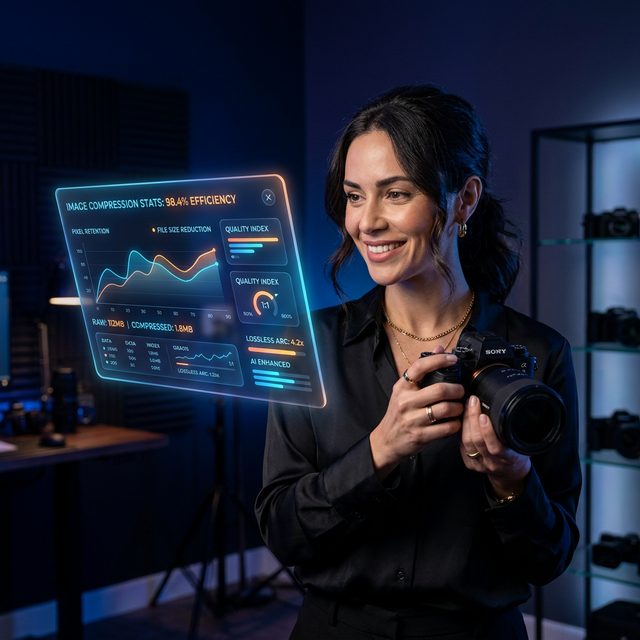
The 2026 US Open set its 128-player singles draw on August 27 carrying a record $108 million in total player compensation — a 20% jump from last year's $90 million — with singles champions each earning $5.5 million when the tournament wraps September 13. Aryna Sabalenka enters as top seed for an eighth consecutive Grand Slam as two-time defending champion; Carlos Alcaraz defends his men's title against a field that includes Alexander Zverev and four-time champion Novak Djokovic. Thirteen Grand Slam winners total are competing across two weeks of play. For the photographers, stringers, and media teams covering it, that scale isn't just a bigger story to write — it's a much bigger volume of images to manage correctly, fast, on tight same-day deadlines.
A Record Purse Means a Record Media Footprint
Prize money jumps like this one don't happen quietly — a 20% year-over-year increase draws more sponsors, more broadcast partners, and more accredited photographers than a flat year would. Multiply that by a 128-player singles draw across two weeks of straight-knockout tennis on multiple courts running simultaneously, and the practical output is thousands of usable frames per credentialed photographer before the tournament is even a third done. The shooting itself isn't the hard part for anyone credentialed at this level — tennis photography at Arthur Ashe or Louis Armstrong Stadium is a known discipline. The hard part is what happens in the ninety minutes between a match ending and a photo desk needing a filed, captioned, correctly sized image.
Where the Actual Bottleneck Sits
A single day session at a major tournament can put a working photographer on four or five different courts, each with different lighting — Arthur Ashe's roof-adjacent shadows behave nothing like an outer court in direct afternoon sun. That means a day's shooting comes back as a mixed batch: different white balances, different exposure baselines, different file sizes depending on whether a body was set to RAW or a compressed JPEG for a faster file-and-move workflow on a tight deadline court. Sorting and standardizing that batch — not the shooting — is what actually eats the time between a match point and a filed image.
The math gets worse in a 128-draw, two-week format specifically because the early rounds run multiple matches in parallel across many courts, which is the opposite of the single-court focus a final gets. A photographer or small team covering day one or two of a major is realistically managing image intake from several matches at once, all needing to be culled, renamed, and sized correctly before anything gets sent.
A Workflow That Survives a Multi-Court Day
- Standardize file naming at import, not after. "Player-Round-Court-Sequence" beats sorting by camera-generated filenames once you're several hundred frames into a session — the same discipline that works for award-ceremony archiving applies here.
- Cull hard before converting or compressing anything. Deciding which frames are worth processing first saves far more time than optimizing a frame that was never going to get used.
- Batch-convert the kept frames to a consistent format before they go anywhere — a mixed folder of RAW, JPEG, and HEIC from different bodies doesn't hold together as a deliverable set. Optimage's convert tool normalizes a whole folder in one pass.
- Compress for the actual delivery channel, not uniformly. A wire-service file has different size requirements than a social post or a same-day recap gallery — sending an oversized file to a deadline-driven photo desk just adds friction on their end too.
- Resize once you know the destination, rather than exporting every size variant speculatively. Optimage's resize tool handles that on demand once a specific use case is confirmed.

Why This Year's Scale Makes the Workflow Matter More
A bigger purse pulls a bigger field of accredited media, which means more competing photographers producing more redundant coverage of the same marquee matches — Sabalenka's title defense and Alcaraz's, especially, will be shot from dozens of angles by dozens of credentialed photographers simultaneously. The images that actually get used are the ones that arrive first, correctly labeled, at the right size for the destination. Raw shooting talent gets you the frame; a clean pipeline gets it published before someone else's version of the same moment does.
Get Your Own Tournament Coverage Organized
Whether you're covering this professionally or just building a personal archive from courtside seats, a two-week major generates more images than a single camera roll can handle cleanly. Set up a free shared gallery to keep a tournament's worth of shots compressed, organized, and easy to find again once the trophy's been handed out.
Summary
- The 2026 US Open carries a record $108 million purse and a 128-player draw set August 27, running through September 13
- The scale of the field pulls more accredited media, which makes same-day sorting and filing the real bottleneck, not shooting
- A standardized naming, culling, converting, and compressing workflow is what actually gets images published before a competitor's version of the same moment
- Set up a shared gallery to keep a tournament's worth of images organized in one compressed, findable place
Related reading:
- Best image format for sports photography — format choices for fast-moving action shots
- Wimbledon 2026 photo sharing tips — the same deadline-photography problem at a different Grand Slam
- World Cup 2026 final photographer accreditation guide — credentialed media workflow at major tournament scale
Frequently asked questions
How much prize money is the 2026 US Open offering?
The 2026 US Open is offering a record $108 million in total player compensation, up 20% from $90 million in 2025. The men's and women's singles champions will each earn $5.5 million.
Who are the top seeds and defending champions at the 2026 US Open?
Aryna Sabalenka enters as the top seed for the eighth consecutive Grand Slam and is the two-time defending champion. On the men's side, defending champion Carlos Alcaraz headlines a field that also includes Alexander Zverev and four-time champion Novak Djokovic, among 13 Grand Slam winners overall in the draw.
Continue reading
Try Optimage — it's free
Compress, convert, and optimize images in seconds. No sign-up, no limits.
Start Optimizing Free